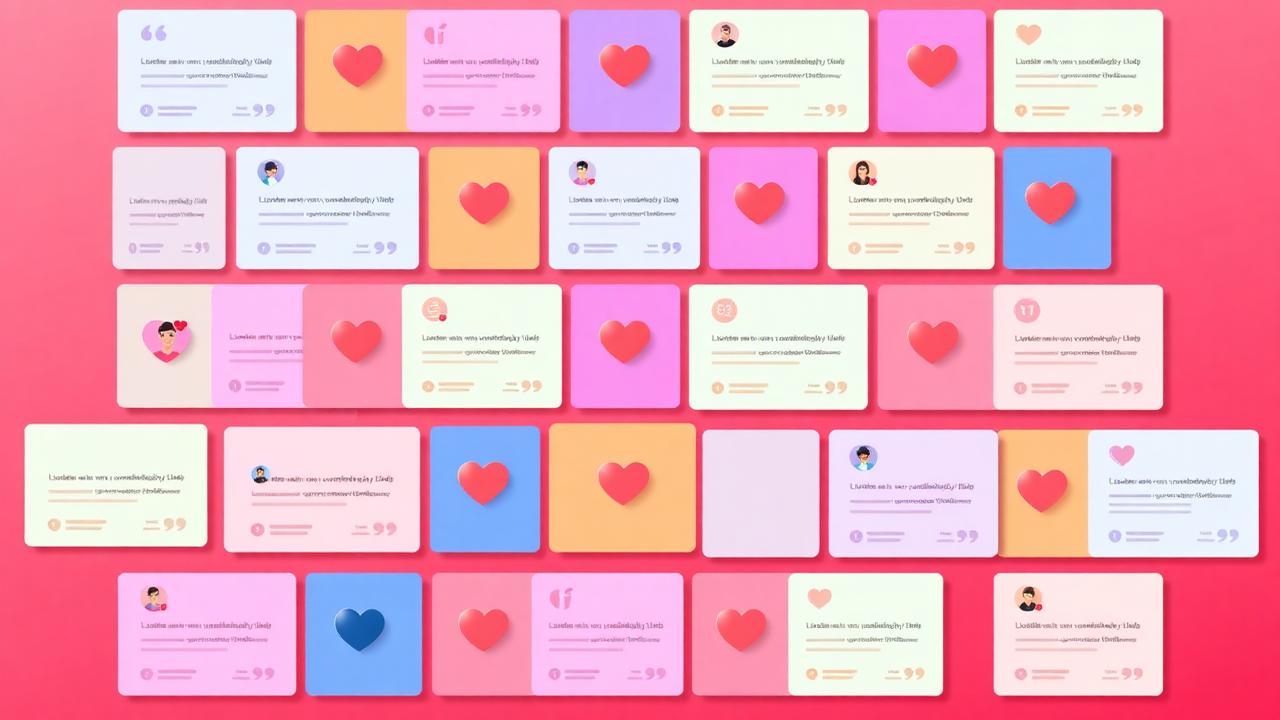

A "wall of love" is a dedicated page or section showcasing dozens (or hundreds) of customer testimonials in a visually engaging masonry or grid layout. When done well, it creates an overwhelming impression of customer satisfaction that's more persuasive than any marketing copy. When done poorly, it's a cluttered wall of text that no one reads. This guide shows you how to design, curate, and build a testimonial wall that actually converts visitors into customers.
What Is a Wall of Love?
A wall of love is a curated collection of customer testimonials, reviews, tweets, and social mentions displayed in a visually rich masonry or grid layout — designed to create the overwhelming impression that "everyone loves this product" through sheer volume and variety of social proof.
The term "wall of love" was popularized by SaaS companies like Notion and Linear, who dedicate entire pages to aggregating customer praise from social media, reviews, and direct testimonials. The format works because it combines two powerful psychological mechanisms:
- Social proof through volume: Seeing 50+ unique voices praising a product creates the "wisdom of the crowd" effect — if this many people love it, it must be good.
- Authenticity through variety: Mixing tweets, video clips, written reviews, and social screenshots feels organic and unmanufactured compared to three curated quotes on a homepage.
Why Are Testimonial Walls So Effective?
Testimonial walls convert 25-40% better than traditional 3-testimonial sections because they create an "overwhelming proof" effect — visitors can't dismiss the volume of positive feedback as cherry-picked or manufactured.
The psychology behind wall of love effectiveness:
- Cherry-picking objection eliminated: Three perfect testimonials might be the company's only three happy customers. Fifty testimonials with varying levels of enthusiasm feel authentic and representative.
- Self-identification: In a large collection, visitors are more likely to find someone who matches their industry, role, or use case — triggering the "if it works for someone like me, it'll work for me" response.
- Social media integration: Embedding actual tweets and social posts with visible timestamps, handles, and engagement metrics adds a layer of verifiability that manufactured quotes lack.
- Scroll behavior: The masonry layout invites browsing. Visitors who scroll through a wall of love spend 3-5 minutes on the page — significantly more than any other page type — creating deeper engagement and trust.
How Do You Design a Wall of Love?
Use a masonry layout with varying card sizes, mix content formats (text, video thumbnails, tweet embeds, star ratings), highlight "hero" testimonials with larger cards, and ensure the wall loads performantly with lazy loading and pagination.
Design best practices:
- Masonry layout: Pinterest-style columns with varying card heights create visual interest and prevent the monotonous grid that makes testimonial pages boring.
- Hero cards: Make 3-5 testimonials visually larger — these must be your strongest stories with specific results. They anchor the wall and draw attention first.
- Visual variety: Alternate between text cards, video thumbnails with play buttons, tweet screenshots, star rating cards, and photo testimonials. Monotony kills engagement.
- Brand-consistent styling: Cards must feel cohesive with your brand while preserving the authentic look of original content (especially tweets and social posts).
- Mobile optimization: Single column on mobile with swipeable video cards. The masonry layout must gracefully collapse to 1-2 columns.
How Do You Curate Content for Maximum Impact?
Curate for diversity across industries, company sizes, use cases, and content types — lead with your 5 strongest testimonials (specific results, recognizable names), then fill with authentic variety that represents your full customer base.
Curation framework:
- Top 5 hero testimonials: These must feature specific metrics, recognizable companies or people, and represent your ideal customer profiles. Place them at the top of the wall.
- Industry diversity: If you serve multiple industries, ensure each is represented. Visitors scan for "someone like me" before anything else.
- Use case coverage: Include testimonials about different features, benefits, and use cases so the wall addresses multiple buyer concerns simultaneously.
- Authenticity signals: Keep some testimonials that are enthusiastic but not perfect. "Really love the product, though the setup wizard could be clearer — 5/5 otherwise" is more credible than universal perfection.
- Recency: Feature recent testimonials prominently. A wall of testimonials all dated 2 years ago signals stagnation.
How Do You Mix Video, Text, and Images Effectively?
Follow the 60/25/15 ratio — 60% text cards for volume and quick scanning, 25% video thumbnails for emotional depth, and 15% image testimonials (screenshots, photos, tweet embeds) for visual variety and authenticity.
Media mixing guidelines:
- Text cards (60%): Fast to scan, SEO-friendly, lightweight. Include the quote, customer name, title, company, and optionally a star rating.
- Video thumbnails (25%): Show a still frame with a play button overlay. Videos load on click, not on page load, to maintain performance. Collect video testimonials with browser-based recording.
- Images/embeds (15%): Tweet screenshots with visible engagement, before/after photos, annotated screenshots of results dashboards. These add verifiability that pure text lacks.
Does Filtering and Search Help?
Add filtering by industry, use case, or product when you have 30+ testimonials — filters help visitors find relevant proof quickly, increasing the chance they find testimonials that match their specific situation and concerns.
Filtering options that increase engagement:
- By industry: "E-commerce," "SaaS," "Agency," "Local Business" — lets visitors instantly find peers.
- By use case: "Social Proof Notifications," "Review Collection," "Video Testimonials" — shows relevance to their specific need.
- By format: "Video," "Text," "Social media" — lets visitors choose their preferred consumption format.
- Search: For walls with 50+ testimonials, add a search bar that filters by keyword, company, or industry.
How Do You Build and Embed a Testimonial Wall?
Use a testimonial management platform like NotiProof's testimonial widget to automatically collect, curate, and display testimonials in an embeddable wall — or build a custom masonry layout with lazy loading and infinite scroll.
Implementation approaches:
- Widget-based (recommended): Testimonial platforms provide embeddable walls that auto-update as new testimonials come in. One line of embed code, automatic curation, and responsive design.
- Custom-built: Use CSS Grid or a masonry library (Masonry.js) with lazy loading for images and video thumbnails. Implement infinite scroll or "Load more" pagination to keep initial page load under 3 seconds.
- Performance: Lazy load all media below the fold. Load video only when the user clicks play. Use srcset for responsive images. Target a Largest Contentful Paint under 2.5 seconds.
- SEO: Render testimonial text server-side (not just in JavaScript) so search engines can index the content. Add structured data using Review schema markup.
Key Takeaways
- Walls of love convert 25-40% better than traditional 3-testimonial sections through volume-based social proof
- Use masonry layouts with hero cards, visual variety, and mixed media formats (60% text, 25% video, 15% images)
- Curate for diversity across industries, use cases, and customer types — not just your "best" quotes
- Add filtering by industry and use case when you have 30+ testimonials
- Optimize for performance with lazy loading, on-click video, and pagination
- Use a testimonial widget for automatic updates or build a custom masonry layout for full control