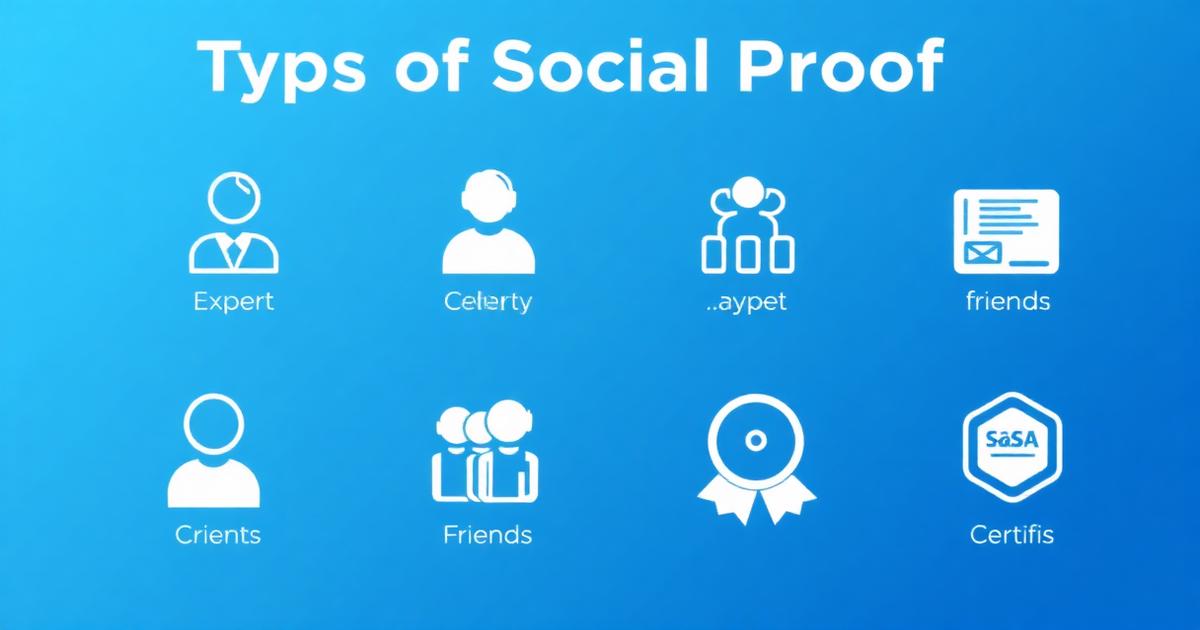

Robert Cialdini — an American psychologist and professor of marketing — identified social proof as one of his six principles of persuasion. Since then, marketers have categorized six distinct types of social proof, each activating different psychological mechanisms and working best in different contexts. Understanding these types helps you build a layered, high-converting social proof strategy.
What Is Expert Social Proof?
Expert social proof is an endorsement from a recognized industry authority — such as an analyst, thought leader, or professional publication — that carries exceptional weight because it combines credibility with authority.
Expert social proof includes industry analyst recommendations (like Gartner or G2 ratings), thought leader endorsements, expert review features, and professional certifications.
How to use it: Seek endorsements from recognized authorities in your industry. Feature expert reviews prominently on your homepage and product pages. If an industry publication has reviewed your product, display that quote with the publication's logo. This builds the website trust signals that sophisticated buyers look for.
Example: "Recommended by Neil Patel" or "Featured in Gartner's Magic Quadrant" instantly elevates a product's perceived credibility.
What Is Celebrity & Influencer Social Proof?
Celebrity and influencer social proof leverages existing audience trust through endorsements from public figures — with micro-influencers in niche audiences often delivering higher ROI than traditional celebrity partnerships.
This type works particularly well for consumer brands, lifestyle products, and services targeting specific demographics. The endorsement doesn't need to come from a traditional celebrity — micro-influencers with engaged niche audiences often deliver higher ROI.
How to use it: Partner with influencers whose audience aligns with your target market. Feature their testimonials, unboxing videos, or reviews prominently. Authenticity matters — audiences can detect paid endorsements that feel forced, so give influencers genuine experience with your product.
Best for: B2C brands, DTC products, lifestyle services, and any business targeting a demographic with clear influencer communities.
What Is User Social Proof?
User social proof — including customer reviews, testimonials, star ratings, and case studies — is the most accessible and often most effective type because potential customers see themselves in the reviewer.
How to use it: Actively collect testimonials through email follow-ups, in-app prompts, and dedicated collection pages. NotiProof's testimonial collection feature supports text, image, and video testimonials. Display them where they'll have the most impact — near CTAs, on pricing pages, and throughout the buying journey.
Pro tip: Specific testimonials outperform generic ones. "NotiProof increased our checkout conversions by 28% in the first month" is far more compelling than "Great product, love it!" Encourage customers to include specific results and metrics.
What Is Wisdom of the Crowd?
Wisdom of the crowd uses large numbers to create confidence through the bandwagon effect — "Join 10,000+ businesses" or real-time visitor counts signal that many people have already validated this choice, reducing perceived risk.
How to use it: Display aggregate metrics prominently: total users, products sold, reviews submitted, or notifications delivered. NotiProof's live visitor counter takes this further by showing real-time activity — "142 people are viewing this page right now" creates both social proof and urgency simultaneously.
Important: Only use this type when your numbers are genuinely impressive. Displaying "3 users this month" would actually harm conversions. If you're early-stage, focus on user social proof (individual testimonials) instead and build toward crowd proof as you grow.
What Is Wisdom of Friends?
Wisdom of friends is the most trusted form of social proof — Nielsen (a global measurement and data analytics company) research shows personal recommendations have 4x the influence of other sources, making referral programs and "friends who use this" features uniquely powerful.
How to use it: Implement referral programs that reward both the referrer and the new customer. Add social sharing prompts post-purchase. If your platform can show that a prospect's connections use your product, leverage that (e.g., LinkedIn's "5 connections work here" feature).
Cross-channel amplification: Integrate with Zapier to automate sharing workflows and referral tracking across your marketing stack.
What Is Certification Social Proof?
Certification social proof uses trust badges, security certifications, industry awards, and official partnerships to provide institutional validation — a Baymard Institute (an independent web UX research organization) study found these badges increased conversions by 42% when placed near checkout buttons.
How to use it: Display relevant certifications and trust badges near payment forms and conversion points. Place industry awards and partnership logos in your footer or dedicated trust bar. Certification proof is especially important for businesses handling sensitive data or financial transactions.
Placement matters: Context determines impact. "SOC 2 Certified," "BBB Accredited," "Google Partner," "SSL Secured" — these signals communicate reliability through third-party authority.
How Do You Combine Multiple Types for Maximum Impact?
The most effective social proof strategies layer multiple types across the customer journey — a single landing page combining crowd proof, user testimonials, expert endorsements, real-time notifications, and certification badges outperforms any single type alone.
- Crowd proof in the hero: "Trusted by 10,000+ businesses"
- User proof mid-page: Specific customer testimonials with results
- Expert proof near pricing: Industry analyst quote or award badge
- Real-time proof via notifications: Live purchase alerts creating urgency
- Certification proof near CTA: Security badges reducing purchase anxiety
This layered approach addresses different psychological needs at different decision points. Use NotiProof's campaign builder to orchestrate multiple types simultaneously and track which combinations perform best with analytics.
How Do You Choose the Right Types for Your Business?
Choose social proof types based on your business model and buyer psychology: e-commerce prioritizes reviews and purchase notifications, SaaS needs testimonials and expert endorsements, agencies lead with case studies, and local businesses focus on Google reviews.
- E-commerce: Prioritize user reviews + crowd proof + real-time purchase notifications
- SaaS: Focus on user testimonials + expert endorsements + crowd metrics
- Agencies: Lead with case studies + expert proof + certification badges
- Local businesses: Google review aggregation + user testimonials + certification proof