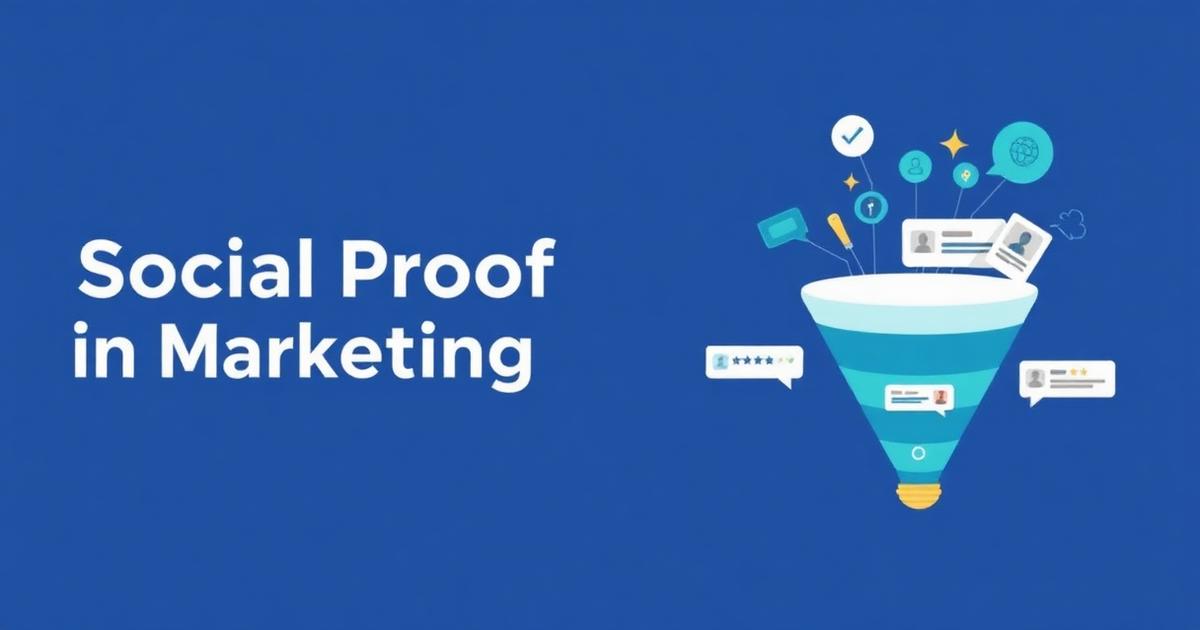

Social proof is the secret weapon of the world's best marketers. When deployed strategically across your marketing funnel, social proof can increase conversion rates by 10–35% and dramatically reduce customer acquisition costs. This guide covers practical strategies for integrating social proof into every marketing channel.
How Do You Use Social Proof at Every Funnel Stage?
Deploy different social proof types at each funnel stage: expert endorsements and press mentions for awareness, customer testimonials and case studies for consideration, real-time purchase notifications for decision, and community activity for post-purchase reinforcement.
Awareness: Use social media follower counts, press mentions, and industry awards to establish credibility with new audiences. "Featured in TechCrunch" or "Trusted by 5,000 companies" creates instant authority that cuts through advertising noise. At this stage, expert and certification social proof are most effective.
Consideration: Deploy customer testimonials, case studies, and detailed reviews to address objections and build trust during the evaluation phase. Prospects at this stage are comparing options — they need proof that your product works for businesses like theirs.
Decision: Use real-time purchase notifications, limited availability alerts, and visitor counts to create urgency and tip the decision in your favor. The psychology of FOMO is most powerful at this stage.
Post-Purchase: Show community activity and user milestones to reinforce the purchase decision and reduce buyer's remorse. "Welcome — you've joined 10,000+ businesses" validates the choice and builds long-term loyalty.
What Social Proof Works Best on Landing Pages?
Landing pages with layered social proof — customer logos above the fold, specific testimonials mid-page, real-time activity near CTAs, and trust badges below — convert 20-40% better than pages without social proof.
Landing pages are the most conversion-critical real estate in your marketing stack, and social proof can make or break their performance. The optimal landing page social proof strategy includes:
- Above the fold: Customer count or logo bar ("Trusted by 5,000+ businesses") establishes instant credibility
- Mid-page: 2–3 specific customer testimonials with photos, names, and results metrics
- Near CTA: Real-time activity notification ("12 people signed up today") creates urgency at the decision point
- Below CTA: Trust badges and security certifications address last-minute anxiety
A/B testing consistently shows that landing pages with layered social proof convert 20–40% better than those without. Use NotiProof's campaign builder to configure page-specific social proof and test different combinations.
How Does Social Proof Improve Email Marketing?
Social proof in email subject lines increases open rates by 15%, while including customer testimonials and milestone notifications in email bodies consistently improves click-through rates and automated sequence performance.
Social proof in emails increases open rates and click-through rates. Effective techniques include:
- Subject lines: "Join 847 businesses that switched this month" — numbers in subject lines increase opens by 15%
- Customer quotes: Include a relevant testimonial in every promotional email
- Milestone notifications: "You've been using [Product] for 30 days — here's what 10,000 other users achieved in their first month"
- Review digests: "See what customers are saying this week" featuring recent reviews
Automated email sequences that include social proof at key decision points (trial expiry, upgrade prompts, re-engagement) consistently outperform those without. Integrate NotiProof with your email platform via Zapier to automate social proof in your email workflows.
How Do You Use Social Proof in Paid Advertising?
Social proof in ad creative increases click-through rates by 10%+ and reduces CPA — star ratings in copy, customer count headlines, video testimonials as creative, and UGC all outperform brand-produced advertising content.
Social proof in ad creative increases click-through rates and reduces cost per acquisition. The most effective ad social proof techniques include:
- Star ratings in ad copy: "★★★★★ Rated 4.9/5 by 2,000+ customers" — Google Ads with review extensions see 10% higher CTR
- Customer count headlines: "Join 10,000+ businesses growing with [Product]"
- Video testimonials as ad creative: Customer story ads consistently outperform brand-produced creative
- UGC (user-generated content): Real customer photos and experiences as ad creative feel authentic and outperform polished brand assets
The key is ensuring continuity — when a prospect clicks an ad featuring a testimonial, the landing page they arrive at must reinforce that proof with additional testimonials, live activity, and trust signals.
Why Combine Multiple Types of Social Proof?
Combining multiple types of social proof on a single page addresses different psychological needs — trust, urgency, popularity, and authority — and significantly outperforms any single type used in isolation.
The most effective social proof marketing strategies layer multiple types. A landing page with customer testimonials, a live visitor counter, recent purchase notifications, and trust badges will significantly outperform a page with only one type of social proof. Each element addresses a different psychological need — trust, urgency, popularity, and authority.
NotiProof's platform lets you orchestrate multiple social proof types from a single dashboard: configure notification campaigns, deploy testimonial widgets, enable visitor counting, and aggregate reviews — all with full analytics tracking.
How Do You Measure Social Proof Marketing ROI?
Measure social proof impact by tracking five key metrics before and after implementation: conversion rate (expect 10-35% lift), average order value, time to purchase, customer acquisition cost, and notification engagement rates.
To measure the impact of social proof on your marketing, track key metrics before and after implementation:
- Conversion rate: Primary metric — expected lift of 10–35%
- Average order value: Social proof often increases AOV as confidence increases
- Time to purchase: Expect reduction as trust accelerates decisions
- Customer acquisition cost: Should decrease as conversion rates improve
- Notification engagement: Click-through and interaction rates on social proof elements
NotiProof's analytics dashboard provides these metrics automatically, showing exactly how social proof notifications impact your conversion funnel. Built-in A/B testing lets you compare different social proof strategies and optimize based on data.
What Are the Best Industry-Specific Social Proof Strategies?
Each industry has optimal social proof combinations: e-commerce thrives on purchase notifications and reviews, SaaS needs signup activity and ROI testimonials, agencies benefit from case studies, and local businesses must prioritize Google review aggregation.
- E-commerce: Purchase notifications + product reviews + stock alerts + bestseller badges
- SaaS: Signup activity + customer logos + specific ROI testimonials + free trial social proof
- Agencies: Client results + industry awards + case studies + expert endorsements
- Local Business: Google review aggregation + booking notifications + visitor counts + local testimonials
Key Takeaways
- Deploy social proof at every funnel stage — awareness, consideration, decision, and post-purchase
- Landing pages with layered social proof convert 20–40% better than those without
- Social proof in email subject lines increases open rates by 15%
- Ad creative featuring customer testimonials outperforms brand-produced content
- Measure impact through conversion rate, AOV, time to purchase, and CAC
- Match your social proof strategy to your industry and customer journey